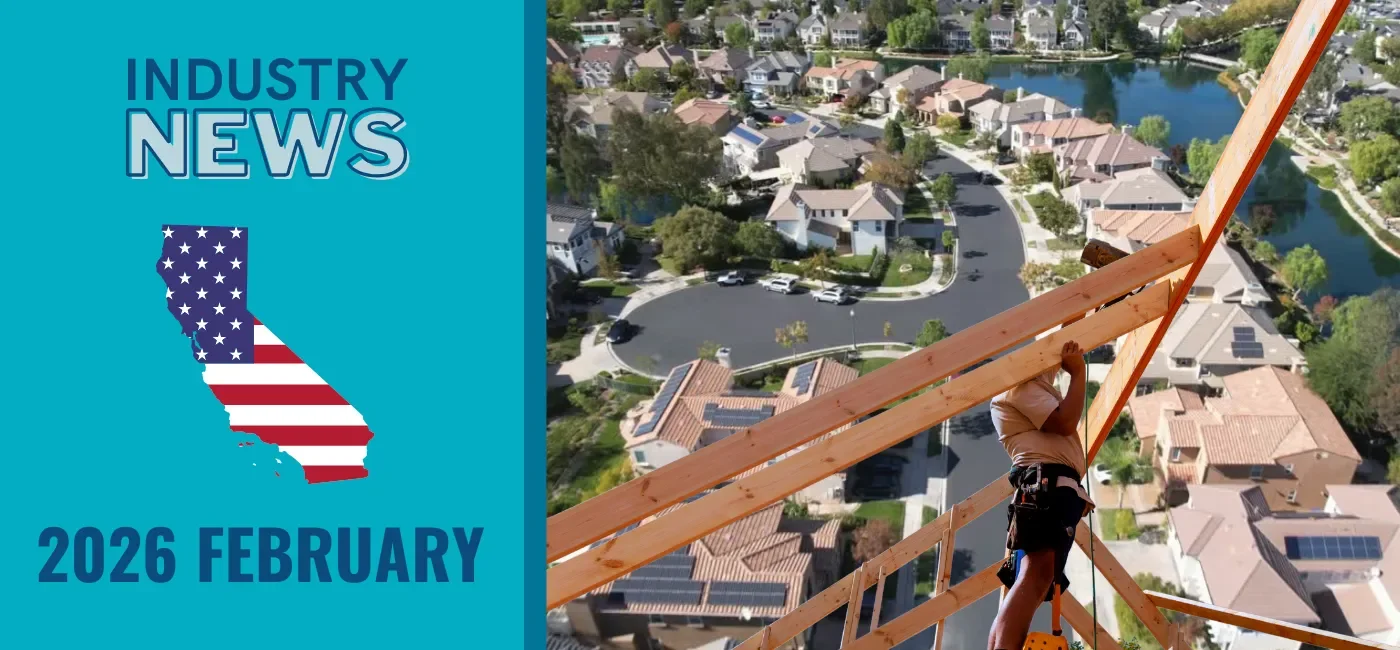
Greetings, California Construction Industry, from the Construction Industry Coalition on Water Quality. With 2026 now in full swing, we continue to closely track and engage on your behalf on several regulatory, legislative, and policy fronts that directly impact our business operations and bottom line.
Here is what you need to know:
📌 LA Stormwater Permit Push Intensifies
First up, we cover our almost nonstop work to prevent the proposed Commercial, Industrial, and Institutional stormwater retrofit permit from moving forward in two urban watersheds in southwest Los Angeles County.
📌 One Bill Stopped. Another Still a Threat.
Next, we highlight an important accomplishment, the downfall of AB 1313 (Papan), and our continuing work to defeat the advancement of SB 601 (Allen), which attempts to rewrite 50+ years of California water law.
📌 Rain Returns, But What Does It Really Mean?
Finally, with the rainy season well underway (we are getting some much-needed rain in February!!!), we update our readers on California precipitation, snowpack, and reservoir storage levels, and look ahead to the rest of 2026 and what we can expect for our water supplies and system reliability efforts.
👉 Take a few minutes to explore each Newsworthy Item below to stay informed, protect your interests, and engage with the issues shaping California’s water future.
FEBRUARY NEWSWORTHY ITEMS
1️⃣ Commercial, Industrial, and Institutional Stormwater Permit Adoption Process Update
The Los Angeles Regional Water Quality Control Board (Regional Board) is considering a sweeping, and certainly costly, new stormwater runoff permit specifically targeting commercial, industrial, and institutional properties larger than 5 acres within two large urban watersheds in southwest Los Angeles County.
The proposed runoff permit, abbreviated CII, is based on a final Residual Designation Authority decision from the U.S. EPA in 2024, targeting pollutants in urban runoff, primarily copper and zinc, and requiring the Regional Board to adopt the permit. The proposed CII permit is widely opposed by a range of property ownership and management interests (including CICWQ), as well as a host of commercial and industrial businesses and trade groups operating in affected areas, also including many county public works agencies, cities, and local districts.
During February and March 2026, the Regional Board is holding several stakeholder meetings to discuss specific topics contained in the proposed permit, including a redline of changes suggested by the coalition, which includes CICWQ. Most contentious is the Regional Board’s expansion of pollutants covered in the CII permit, from just two, copper and zinc, to more than 30 other pollutants of concern. Also noteworthy is the Regional Board’s insistence on imposing numeric effluent limits for the expanded list of pollutants in the proposed CII permit, as well as the requirement that each property owner conduct extensive stormwater runoff characterization and prepare a comprehensive stormwater pollution prevention plan, commonly known as an SWPPP. A single violation of an NEL in a permit can cost hundreds of thousands of dollars to litigate and settle with both the Regional Board and from citizen suits filed by non-governmental environmental organizations.
We will keep our readers updated throughout 2026 as CICWQ and its coalition partners work to fight back and mitigate the effects of this troublesome permit.
Read more about the permit development process here.
2️⃣ Legislative Alert: Great News! AB 1313 (Papan) Fails in Assembly; Beware! SB 601 (Allen) Still Under Consideration
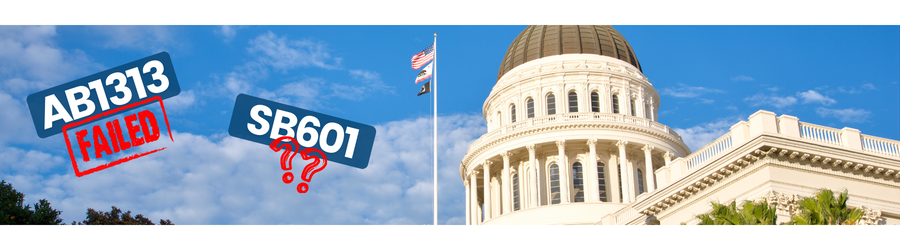
Great news, California Construction Industry, AB 1313 (Papan), which would have imposed sweeping new and costly stormwater runoff and treatment controls for commercial, industrial, and institutional properties across California, failed to obtain enough votes to move out of the Assembly and is dead for the remainder of the 2026 legislative session.
Beware, however, of SB 601 (Allen), which attempts to rewrite California water law that has been in place since the late 1960s…even before the adoption of the Federal Clean Water Act. As proposed, SB 610 (Allen) greatly increases permitting burdens for wetlands and water quality regulation through all types of municipal separate storm sewer system (MS4) permits and the Construction General Permit (CGP) for stormwater.
Unfortunately, SB 601 (Allen) passed out of the Senate policy and appropriations committees in 2025 and was moved into a 2-year bill. So, in 2026, we can look for the bill sponsor and environmental advocates who helped author the bill to try to move it forward and into the Assembly for further consideration.
Please alert your legislative advocates to oppose SB 601 (Allen). We will be on the lookout for any movement on the bill and keep our readers informed.
3️⃣ California Hydrologic Conditions Update – February 2026
According to water supply experts, our snowpack is “below” normal compared to historical records, partly due to dry conditions throughout California in early 2026. The California Department of Water Resources (DWR) conducted the snow survey on January 30th, which is the second measurement of the season at Phillips Station. A recent manual survey recorded 23 inches of snow depth and a snow water equivalent of 8 inches, which is 46 percent of average at this location.
On a more positive note, the DWR reported through its California Water Watch, a comprehensive water tracking (records and forecasting) website, that total precipitation and reservoir levels across the state are at levels above 100% of normal. The California Water Watch website allows users to track nine elements of the hydrologic cycle, including precipitation and reservoir levels across the state, on a daily basis.