As temperatures soar across California, two significant water quality proposals are drawing close attention from public agencies, property owners, businesses, and the development community. The regulations could reshape how stormwater runoff is managed, monitored, and funded across some of the state’s largest urban regions.
CICWQ is tracking these developments closely because the requirements could affect project feasibility, property operations, public infrastructure budgets, and communities throughout Southern California.
Here’s what you need to know in July:
🏢 Los Angeles County Commercial Runoff Permit Adopted
The Los Angeles Regional Water Quality Control Board adopted a far-reaching new permit for certain commercial, industrial, and institutional properties, introducing complex compliance pathways, expanded pollutant limits, and potentially significant legal and financial exposure.
🌧️ Santa Ana Regional MS4 Permit Nears Adoption
A proposed regional stormwater permit affecting Orange, Riverside, and San Bernardino Counties could impose more than $11 billion in new compliance costs, raising serious concerns for local agencies, development projects, and disadvantaged inland communities.
👇 Read the full updates below to understand what these proposed rules could mean for your property, projects, community, and California’s broader water quality policy landscape.
JULY NEWSWORTHY ITEMS
1️⃣ Los Angeles Regional Water Quality Control Board Adopts Controversial New Permit Regulating Runoff from Commercial, Industrial, and Institutional Facilities in Los Angeles County
The Los Angeles Regional Water Quality Control Board adopted a sweeping and costly new permit that imposes on property owners of commercial, industrial, or institutional properties five acres or greater in two large, urban watersheds in southwest Los Angeles County.
The new runoff permit, abbreviated CII, is based on a final Residual Designation Authority decision from the U.S. EPA in 2024, targeting pollutants in urban runoff, primarily copper and zinc, and requires the Regional Board to adopt the permit. Unfortunately, the CII permit provides three specific pathways for compliance (one regional and two on-site), each of which is complicated, costly, and imposes legal risks and culpability.
The proposed CII permit is widely opposed by a range of property ownership and management interests (including CICWQ), as well as a host of commercial and industrial businesses and trade groups operating in affected areas, including many county public works agencies and cities and local districts.
Noteworthy is the Regional Board’s insistence on imposing numeric effluent limits for an expanded list of pollutants in the proposed CII permit, and the requirement that each property owner conduct extensive stormwater runoff characterization and prepare a comprehensive plan, commonly known as a SWPPP. A single violation of an NEL in a permit can cost hundreds of thousands of dollars to litigate and settle with both the Regional Board and from citizen suits filed by non-governmental environmental organizations.
CICWQ will provide updates on how the new CII permit proceeds, as there is a strong likelihood that the CII permit will be imposed in other urban areas of California.
2️⃣ Santa Ana Regional Water Quality Control Board New Regional MS4 Permit Set for Adoption
Despite widespread concerns from public works agencies (in Orange, Riverside, and San Bernardino Counties), the Santa Ana Regional Water Quality Control Board is moving forward with approval of a new regional municipal separate storm sewer system (MS4) permit. MS4 permits govern stormwater runoff from urban areas, including almost all new private development and redevelopment projects.
The Santa Ana Regional Water Quality Control Board held a specific workshop on the permit on Friday, July 24, where public works agencies and the private sector were able to continue voicing concerns about the new regional permit and its many impacts. The Regional Board also accepted comments on the proposed MS4 permit on July 20. A notable new economic analysis done on behalf of the 3-county pubic works agencies who are the principal permittees suggests new compliance costs could exceed $11 billion. This is a tremendous fiscal impact, especially for inland communities including many disadvantaged areas.
We will keep our readers informed next month with the workshop results and any impacts on the adoption schedule.
3️⃣ Final Registration: Two Essential August Water Quality Events
August brings two important opportunities to connect with water quality professionals, public agencies, industry leaders, and policy stakeholders from across the region. Secure your place now and join the conversations shaping California’s water future.

🌊 41st Annual Tri-State Seminar | August 3–6, 2026
Final registration is underway for this longstanding seminar, bringing together water quality leaders and stakeholders for timely discussions, practical education, and valuable professional connections.
Register today to reserve your spot before the seminar begins.
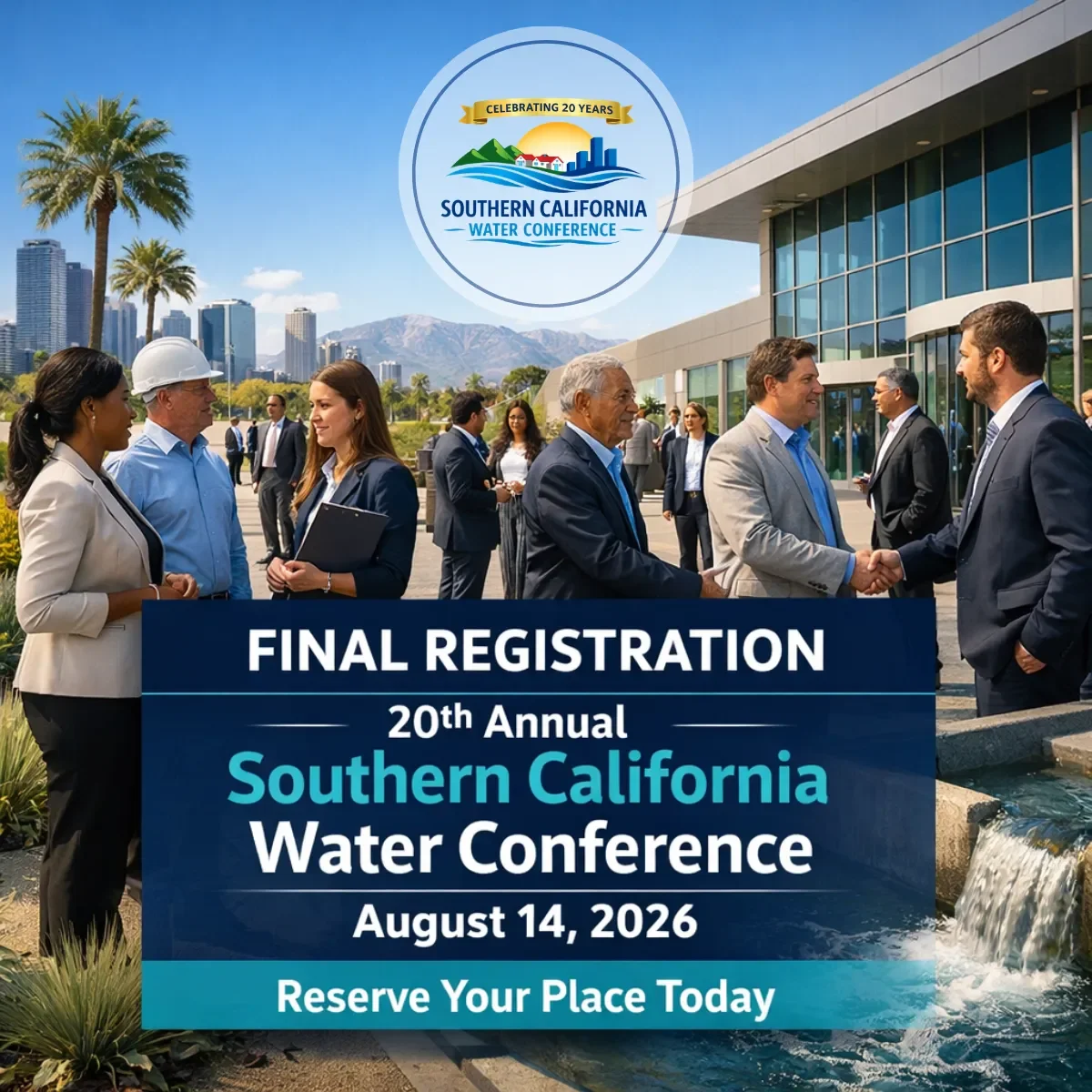
💧 20th Annual Southern California Water Conference | August 14, 2026
Marking its 20th year, the Southern California Water Conference offers a focused forum for understanding the policies, regulations, infrastructure needs, and emerging challenges affecting the region’s water resources.
Do not miss your final opportunity to register and be part of this milestone event.